The classic Super8 loop player re-designed for the modern era.
Through the 1960s and 70s, millions of hand-cranked Super 8 loop viewers were made, and millions of film loops to run through them. No bulb, no battery, no screen: you hold it up to whatever light is in the room. Wind forward and it plays. Wind back and it runs backwards. Slow down and you can walk it frame by frame.
This is a new one, engineered from scratch in 2026. Precision bearings, a metal detent gripper and glass achromatic optics take the place of the original plastic parts, inside a 3D-printed shell. It still plays the original vintage cartridges, which are still easy to find. Nothing to charge, nothing to update, nothing asking for your attention. The only thing driving it is your hand.
Everything else you watch decides when to show you the next frame. This one waits. Wind slowly and the motion stretches out; stop, and a single frame just sits there to study, lit by the room you're standing in. Speed is something you do, not something being done to you.
Light comes off the film, through glass, into your eye. No sensor, no panel, no pixel grid in between. What you are looking at is the actual object, magnified, not a picture of it.
Film grain gets finer the closer you look, because it's physical structure rather than a sampling artefact. Nothing here is being interpolated, smoothed, or redrawn sixty times a second.
A window, a lamp, an overcast afternoon: any of it is enough. There's no bulb to burn out, and no battery to find dead in a drawer five years from now.
No firmware, no account, no end-of-support date. It will work exactly this well in thirty years, which is a claim vanishingly few things you own can make.
Retro-hardware people: modders and collectors after something mechanical that still works and can be opened up. Super 8 shooters already handling film, who want somewhere to put a loop. People with footage that matters to them (a wedding, a child, an afternoon in a workshop) looking for somewhere it can live that isn't a hard drive. And artists making short, physical, looping work meant to be held rather than scrolled past.
Hand-cranked Super 8 loop viewers were a mass-market format through the 1960s and 70s. Fisher-Price made the best known of them, but they were far from the only maker. Hold one to your eye and start winding: a small mirror-and-lens system pulls a closed loop of film past the gate for direct, magnified viewing, lit by nothing but the room you are standing in. Entirely mechanical.
Dozens of makers, countless variations: different shells, different mechanisms, the same idea. They turn up constantly on eBay and in secondhand listings. This isn't a rare collector's piece; it's a real, findable format most people have simply never heard of.
A closed film loop feeds continuously through the cartridge with no rewinding and no take-up reel. One handle does everything: it advances the film and drives the viewfinder optics at once.
Cartridges shipped pre-loaded with a single looped scene, mostly animation shorts, alongside rarer sports-training loops and short action clips. Millions were made. What none of them were designed to be is refillable: the film you get is the film that's in there.
The format began with Action Films and was licensed widely: Fisher-Price, Mettoy, Corgi and Disney among them. Loop8 plays any of them, and they turn up steadily on eBay and in secondhand listings, usually alongside the players themselves.
That's the part we want to change. Opening an original and splicing in your own footage is possible today, and there's a guide for it, but it's genuinely hard. A cartridge you can load yourself, without cracking open a vintage one, is what comes next.
Same mechanical idea as the 1972 original, built new with materials and tolerances it never had. It plays original vintage cartridges as-is.
The manual film-drive handle provides bidirectional control of the loop transport. Rotational speed determines playback pace; direction determines forward or reverse motion.
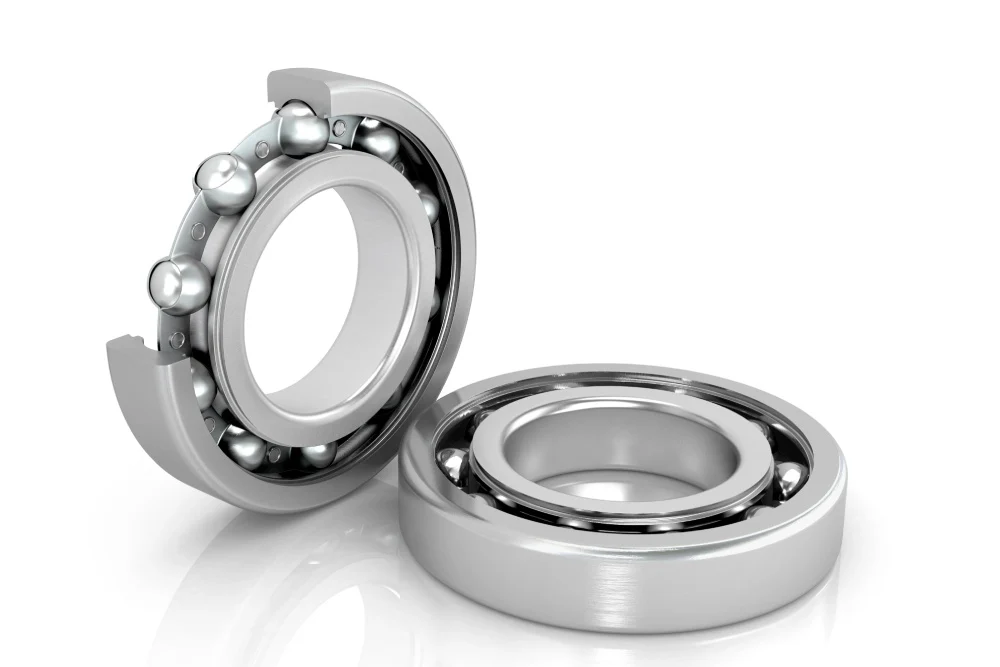
Replaces the original's plain bushings: smoother action, less play in the drive train over time.
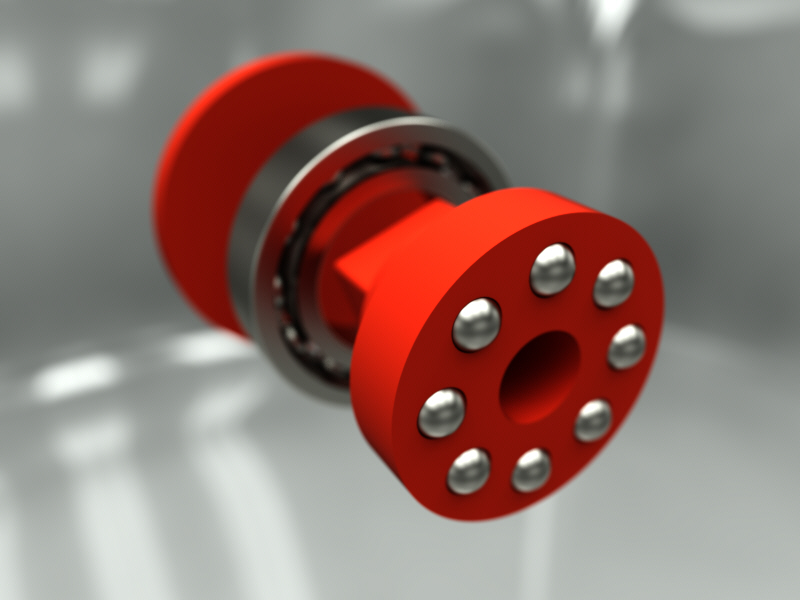
A machined ball/detent gripper replaces the original plastic wheel that drove film advance.
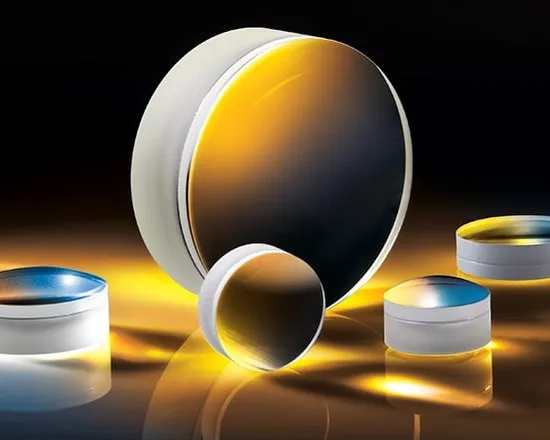
Glass-coated achromatic doublet pair replaces the original's two-element plastic lens: sharper, less chromatic fringing.
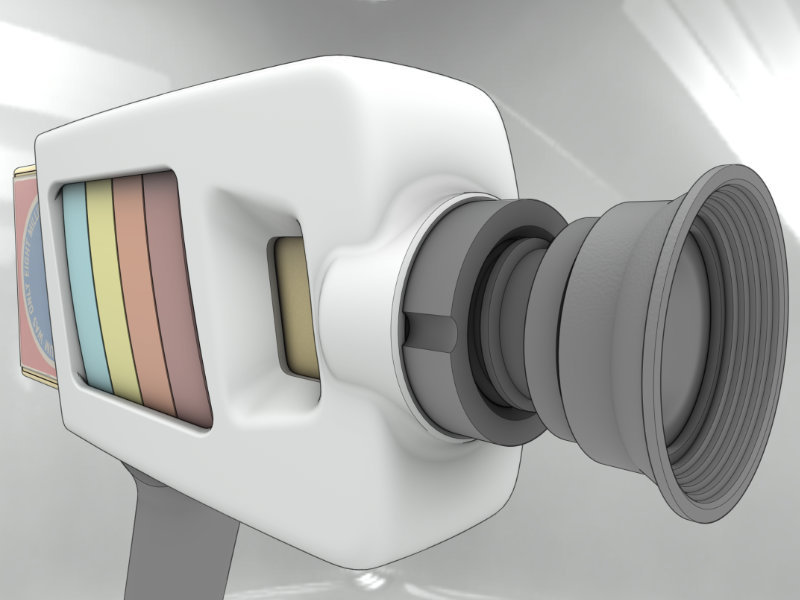
Additively manufactured case with user-selected color bars and part colors. Make it your own.